- Overview
- Trip Outline
- Trip Includes
- Trip Excludes
- Gallery
Richtersveld & Namaqualand
27 August to 9 September 2026
Richtersveld scenery
This fantastic trip combines the Richtersveld, a spectacular mountain desert in the north-western corner of South Africa and Namaqualand, the “garden of the gods”.
Destinations
The Richtersveld
The Richtersveld is one of the remotest and least explored regions of South Africa; it is also one of the richest in terms of both biological and mineral wealth. The isolation of the Richtersveld and its enigmatic beauty make it an increasingly attractive destination for adventurous travellers and for those seeking out Earth’s final frontiers.
The Richtersveld region stretches from Steinkopf and Port Nolloth in the south up to the Orange River and from Alexander Bay to Vioolsdrif. The Ai Ais Richtersveld Transfrontier Park is a small part of this, in the loop of the Orange River. This park is in one of the most undeveloped and inaccessible areas in South Africa.
The Richtersveld is a desert of ever-changing vistas-contorted mountains with awe-inspiring names like Mount Terror and Devil’s Tooth, narrow valleys, wide plains and rocks fashioned into bizarre shapes by wind, rain and extremes of temperature. The mountains of the Richtersveld are truly awe-inspiring and lovers of remote places will find endless pleasures in its richness.


Namaqualand
A world away from the lush, safari-visited jungles and plains of Africa, Namaqualand, a largely unknown and overlooked corner of South Africa, offers a beauty unsurpassed by all else. Namaqualand is one of the great treasure-houses of the botanical world, haven to more than 3000 different floral species. Many of these, for a few weeks in springtime, burst into riotous life, clothing the countryside in a spectacular mantle of orange, yellow and white blooms. Apart from these instantly accessible, dazzling tapestries of bright spring colour, Namaqualand sustains a wide variety of perennials: geophytes, dwarf shrubs and a huge number of succulents.
Three main vegetation types occur across the area being visited, namely Cape fynbos, mountain renosterveld and succulent karoo. Each is recognised by a suite of dominant shrubs, often of quite different plant families and usually with a distinctive leaf type and overall appearance.
As if by magic a tapestry of brilliant colours unfold enticingly along the winding roads of the Namaqua National Park. Butterflies, birds and long-tongued flies dart around among the flowers, seemingly overwhelmed by the abundance and diversity. Every turn in the road paints an unforgettable picture: valleys filled with Namaqualand daisies and other spring flowers that pulse with sheer energy and joy.


The Diamond Coast
Situated in the north-western corner of South Africa’s rugged Northern Cape is the stretch of pristine coastline aptly named The Diamond Coast. These shores have remained virtually unknown to the public at large as it is within the restricted and previously forbidden diamond mining areas. The valuable mineral treasures hidden within its sands are not the only treasures of the area. The Sandveld has been jealously guarded and is home to many indigenous plants, animals and insects.


OUR TRIP
We depart from Johannesburg on an early morning flight and head for the “Fairest Cape of All” at the start of what promises to be a memorable and rewarding trip.
We proceed to our first overnight stay, a beautiful guest farm, overlooking the Gifberg, near Vanrhynsdorp.
The Gifberg Pass connects Vanrhynsdorp with the top of the Matsikamma Mountain, some 20 km south of the town. The Pass breasts a flat-topped mountain called Maskam that forms part of the Matzikamma mountain range. The Gifberg is so-called because it is the only place in the world where the highly poisonous ‘gifboom’, Hyaenanche globosa, is found. Its fruit is highly toxic and was used by the San on their arrowheads and by local farmers to kill hyenas.
The Gifberg also has some of the most well-preserved rock art in the whole of the Western Cape.

After some early morning birding and a hearty breakfast, we head northwards.
We travel via Springbok, the magnificent Spektakel Pass and Kleinsee to our next overnight stop, a charming guesthouse at MacDougals Bay, near Port Nolloth, on the Diamond Coast.
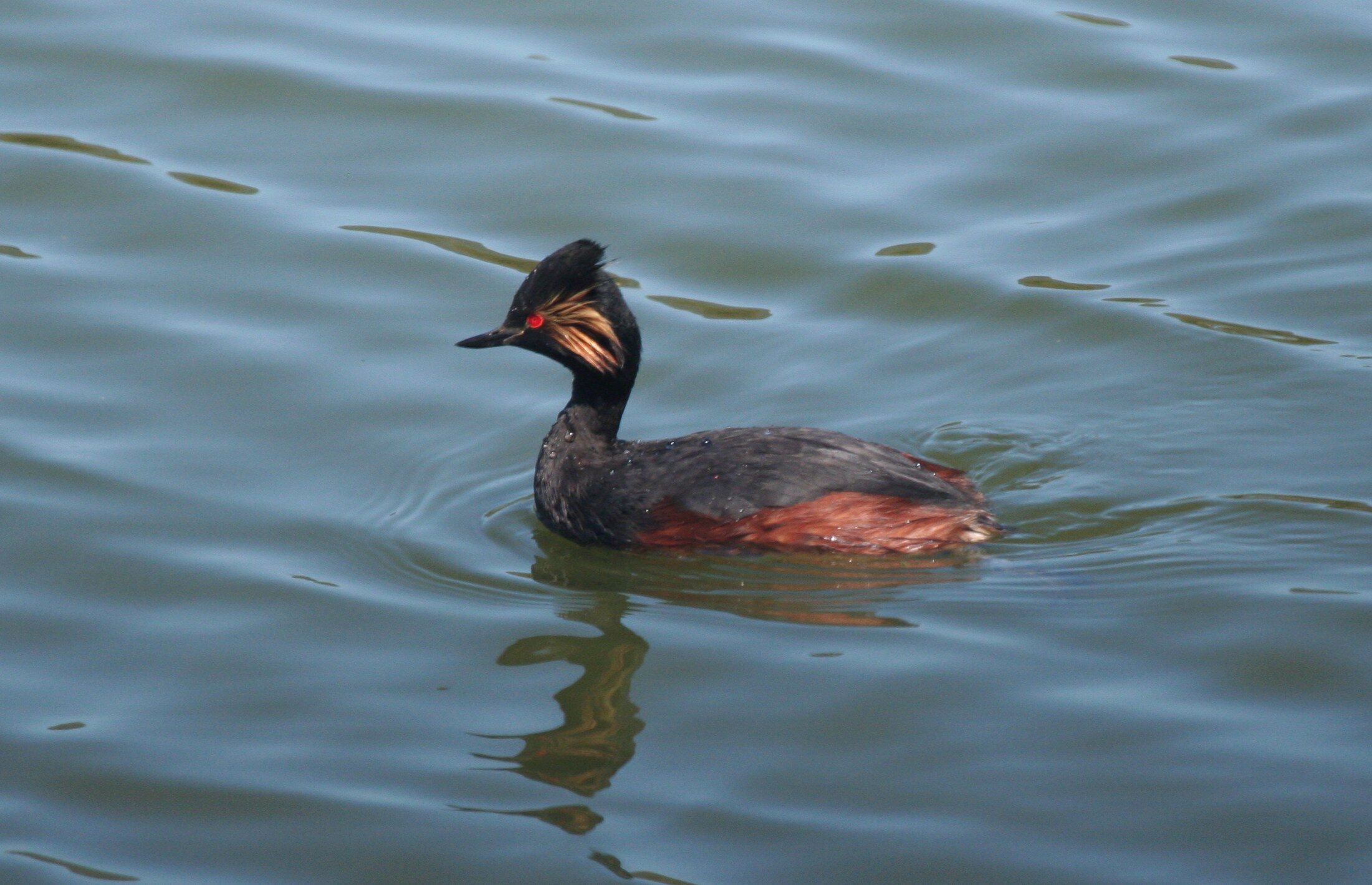
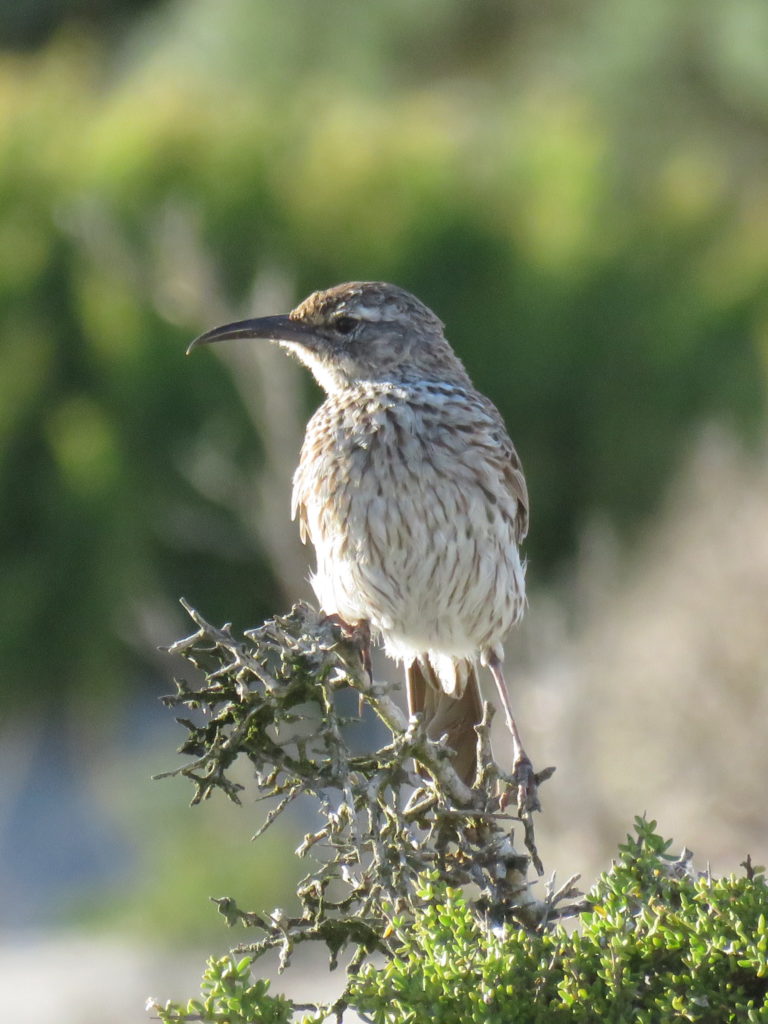
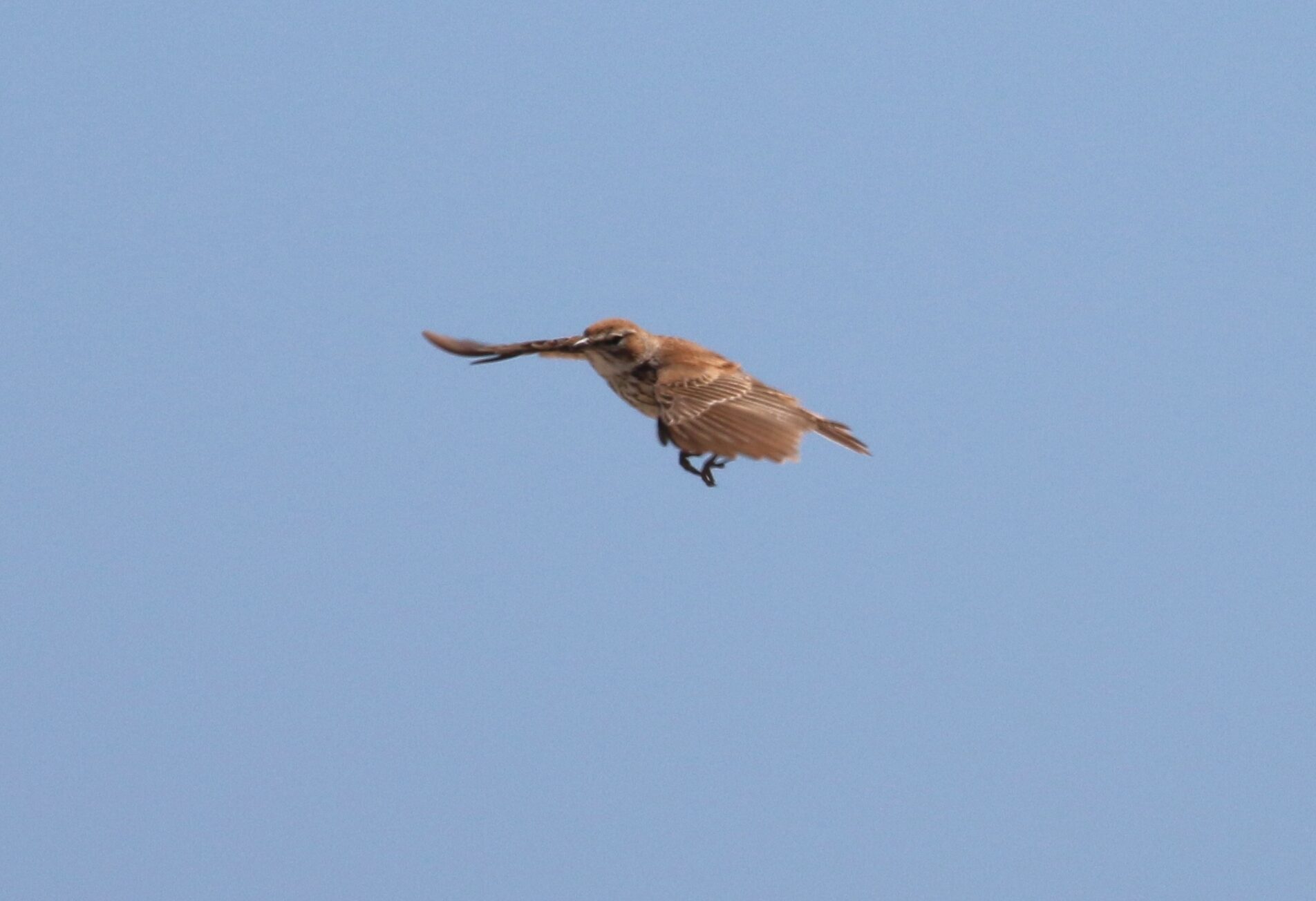
Port Nolloth is a small town, originally built to provide an export harbour for the copper from Okiep. The town has a strange desert atmosphere as it is on an arid and barren coastal plain, yet it holds some fascination for the visitor.
We spend one night in a charming guesthouse on the seafront at MacDougalls Bay, a stones-throw away from Port Nolloth..
Our primary birding targets for Port Nolloth are Dune and Cape Long-billed Larks. Both species occur in dunes around Still Bay, a few kilometers north of Port Nolloth.
Birds along the coastline include Bank and Crowned Cormorant, African Black Oystercatcher, and various species of waders.
We take our leave of Port Nolloth and head northwards towards Alexander Bay, en route to the Richtersveld wonderland. Alexander Bay, some 90km north of Port Nolloth, is a diamond mining town belonging to Alexkor and one passes through a security gate before entering the town. We visit the Orange River mouth and its associated wetlands. The river mouth, mudflats, marshlands, islets near the mouth, and adjacent pans provide a sizeable area of sheltered shallow water suitable for concentrations of wetland birds, which use these habitats for breeding purposes or as a stopover on migration routes. The bird population can be as high as 20000-26000 individuals. Lesser and Greater Flamingos, Black-necked Grebe, Chestnut-banded Plover, Caspian and Damara Terns, Little Bittern and Maccoa, and African Black Ducks are some of the more interesting species which may be found.


The Richtersveld is a harsh and unpredictable land where water is scarce and life-sustaining moisture comes in the form of early morning fog which rolls in from the cold waters of the Atlantic Ocean, sustaining a remarkable range of small reptiles, birds and mammals. A staggering assortment of plant life, some species occurring nowhere else, is to be found here, with gnarled quiver trees, tall aloes and quaint “halfmens” keeping vigil over this inscrutable landscape.
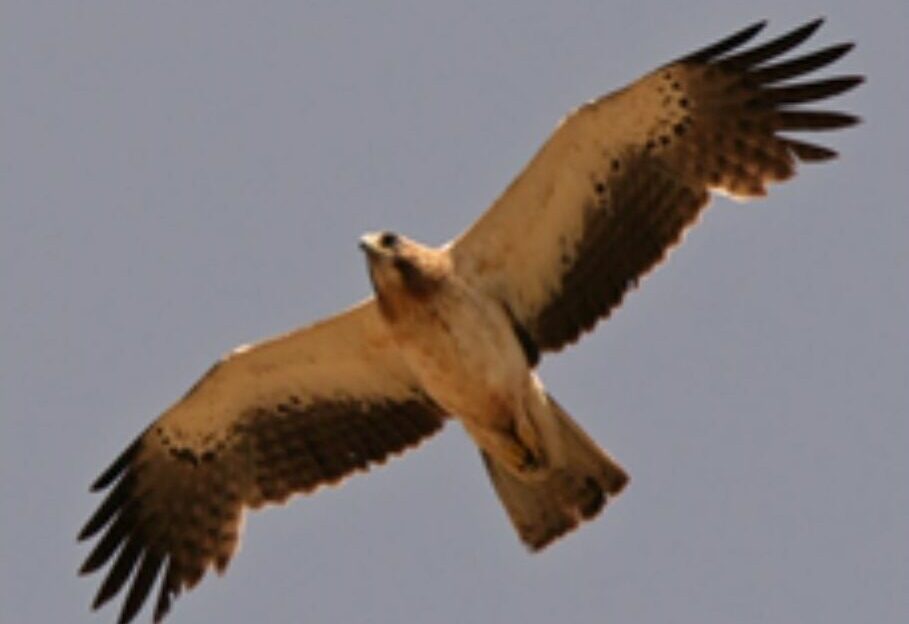
Birding in the Park is very rewarding and many of the dry western specials can be found. These include Ludwig’s Bustard, Bradfield’s Swift, Cinnamon-breasted Warbler, Namaqua Warbler, Orange River White-eye, Karoo Eremomela, Grey Tit, Cape Penduline-Tit, Tractrac and Sickle-winged Chat and Stark’s, Sabota and Karoo Long-billed Lark. Raptors are well represented, with Booted Eagle, Black-chested Snake-Eagle, Jackal Buzzard, Lanner Falcon and Southern Pale Chanting Goshawk occurring regularly. A night excursion into the hills surrounding the camp may yield Cape Eagle-Owl if we are very fortunate.


We spend our first three nights in the Park in fully equipped chalets in Sendelingsdrift rest camp, overlooking the Orange River.


Our fourth night is spent in glorious isolation at Gannakouriep Wilderness Camp is situated within a rocky valley in the south-west of the park. The camp is situated in the dry interior and is a remote and charming desert retreat, offering sweeping valley views, unmatched stargazing and complete isolation.
We say a fond farewell to the Richtersveld and start our journey southwards. Our routing takes us through the Richtersveld Community Conservancy, and we travel via the little towns of Eksteenfontein and Kuboes to Naries Namakwa Retreat, a beautiful hideaway on the edge of the Spektakelberg between Springbok and Kleinsee.
Our next overnight destination is Naries Namakwa Retreat, a beautiful hideaway on the edge of the Spektakelberg between Springbok and Kleinzee.
We spend three nights at Naries in comfortable self-catering cottages, offering a unique experience amid spectacular scenery. Many people flock to Namaqualand for its wildflower displays in springtime, but few are aware of the many succulent species that can be found all year round. Naries hosts several of these extraordinary gems.
Using Naries as our base we pay a visit to Namaqua National Park, near Kamieskroon. Our route takes us into the heart of spectacular spring floral displays that provide such a colourful, yet ephemeral façade to a fascinating region. Within a radius of 60km one finds four different regions, each with its characteristic rock formations and natural flowers, developing at their own pace during the flower season to eventually display a kaleidoscope of colour – multi-coloured carpets stretching as far as the eye can see. We spend three nights at the superb Naries Namakwa Retreat in charming cottages, offering a unique experience amid spectacular scenery.


We also spend some time in the Goegap Nature Reserve, 15km south-east of Springbok. The reserve features most of Namaqualand’s natural riches on 15000ha of typically granitic, rocky hills and sandy flats. It supports close on 600 indigenous flower, 96 bird and 45 mammal species. The Hester Malan Wildflower Garden is a spectacular additional feature, showcasing many Namaqualand succulents and a spectacular rock garden.
Birding highlights include Pale-winged Starling, Ground Woodpecker, Cinnamon-breasted Warbler, Layard’s Warbler and Black-headed Canary.


Driving through the area known as the Knersvlakte without being told, you would cast a bored look across the white quartz-strewn plains and think there was nothing there. However, it is a world of miniature succulent plants, sheltered from the worst of the summer heat by the reflective quartz gravel. This botanical treasure is sprawled between the towns of Vanrhynsdorp and Bitterfontein. It falls within the Succulent Karoo region, considered one of the biodiversity hotspots of the world.
Knersvlakte means gnashing, or grinding, plains. Opinion is divided about whether this refers to the difficulty of crossing the plains in an ox wagon (and the attendant gnashing or gritting of teeth), or the crunching noise made by iron wheels on quartzite gravel.
Here you will find plants with names as cute as they look: baby bums, donkey ears, little buttons, and fingers-and-thumbs. Some look like tiny green marbles, others like flowering pebbles. Others emerge above the soil only during the temperate spring and retreat into the soil, almost invisible, when the summer heat arrives.
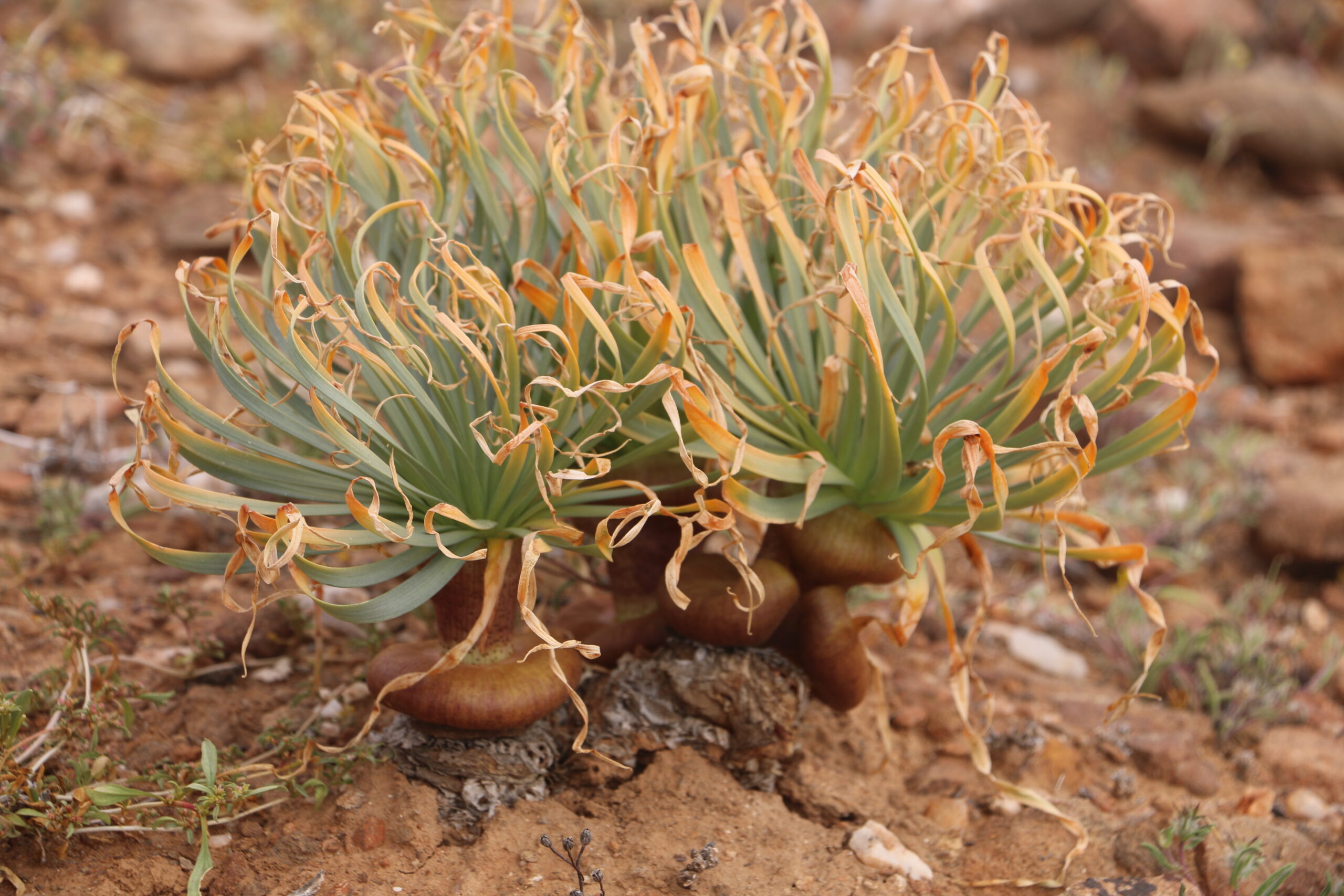
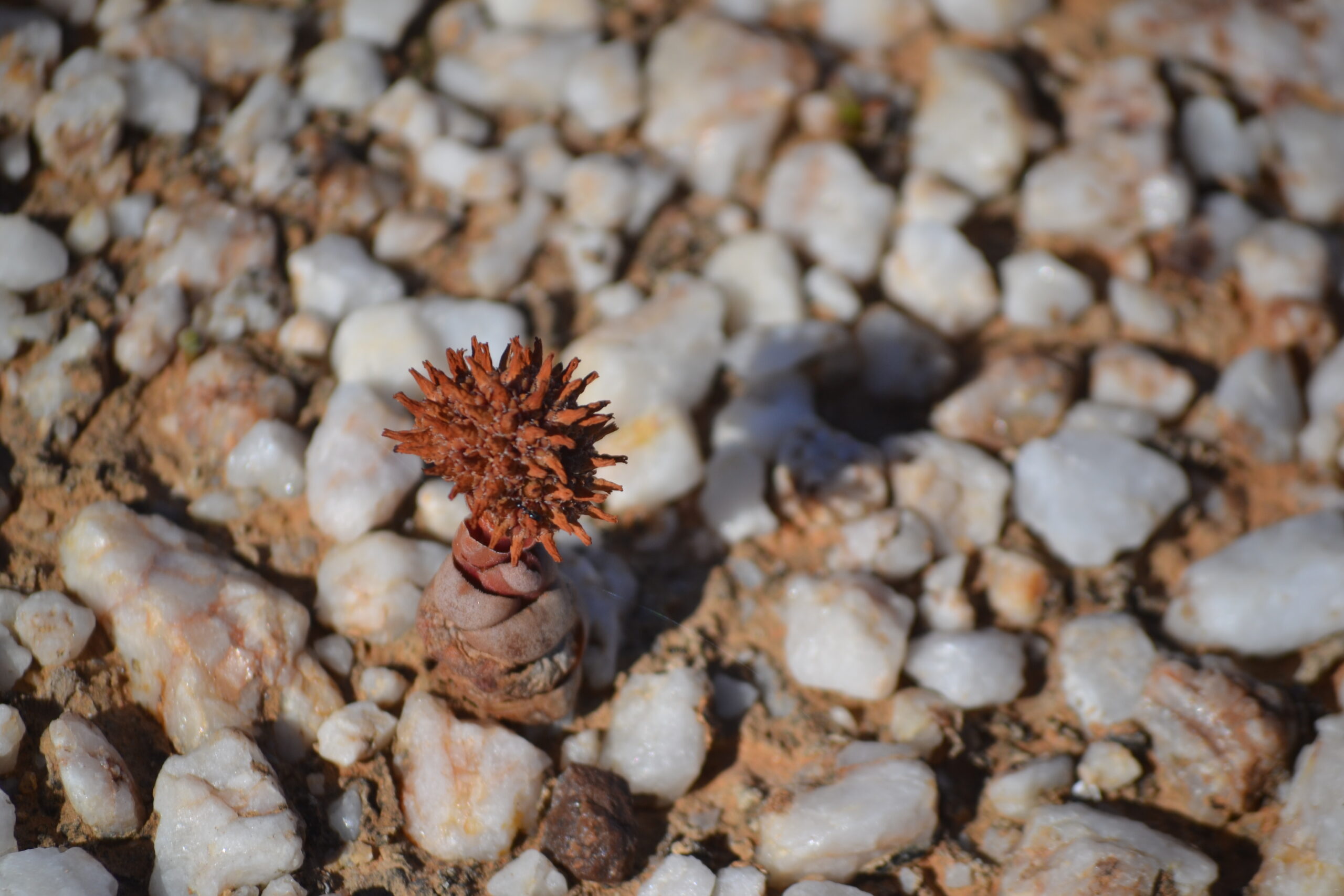
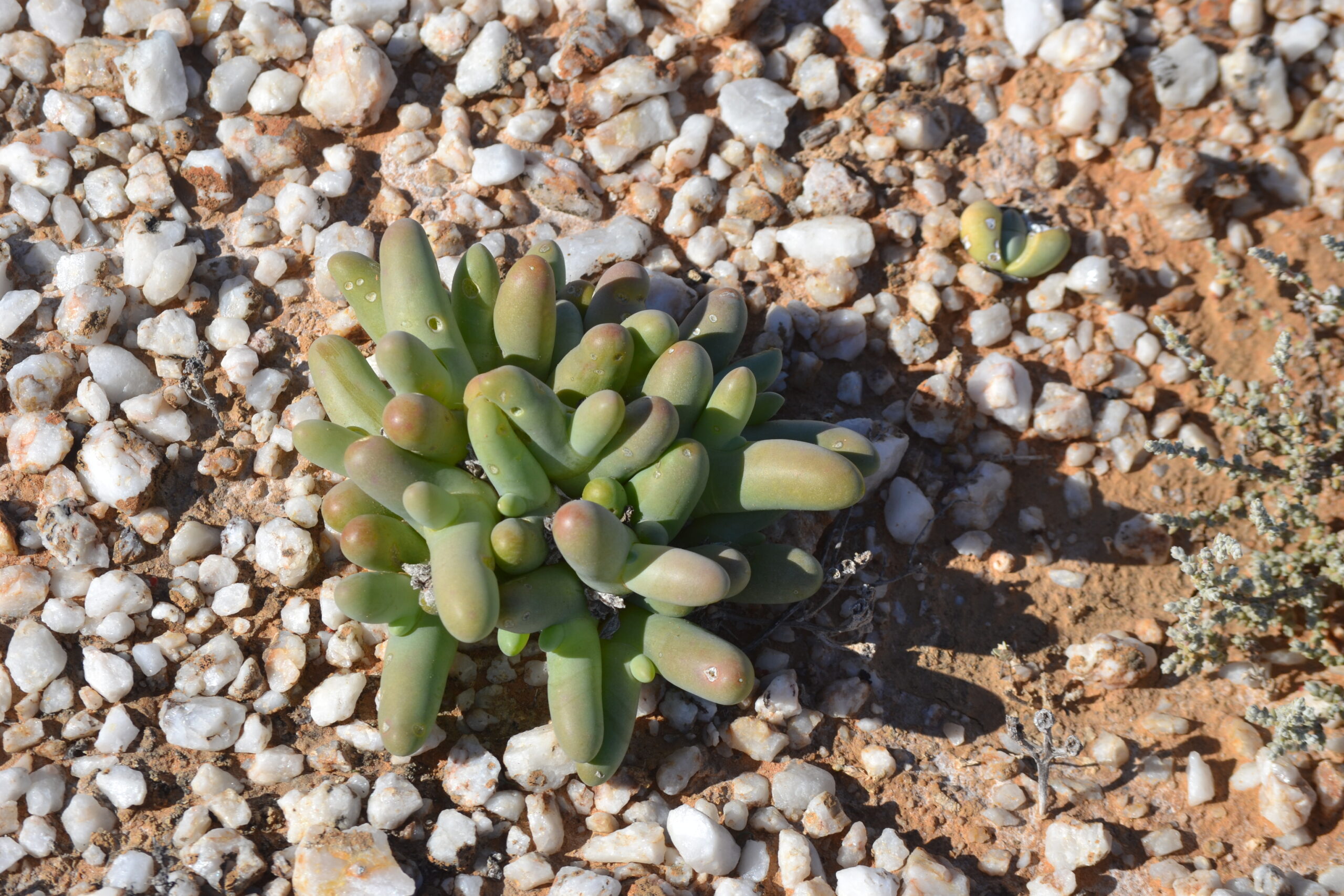
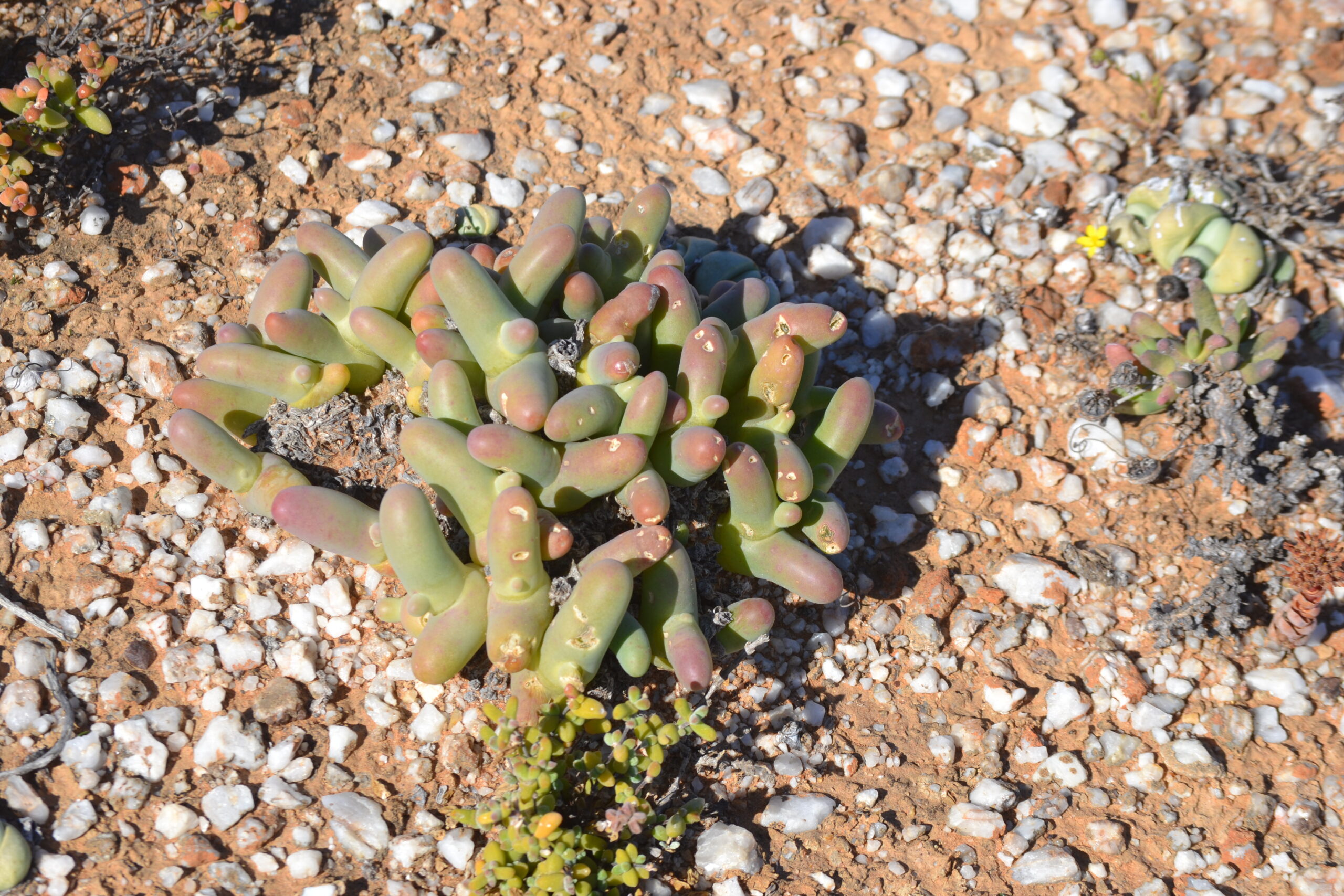
We spend one night at a comfortable guesthouse in the hamlet of Nuwerus. This little country town is situated within an area known as the Hardeveld, part of the Knersvlakte.
Fields of flowers, star studded nights, quiver trees, enormous granite outcrops and the icy Atlantic are but a few wonders that await the visitor to the area around Garies. To describe Garies as in the middle of nowhere does not do any damage to the reputation of the town.It lies in the heart of the Namaqualand and makes an excellent base from which to explore the surrounding area. Garies and Kamieskroon lie in the heart of an arid biodiversity hotspot – the succulent Karoo.The sheer lavishness of blooms during spring, after good rains, draw visitors to this part of the Namaqualand from around the world.

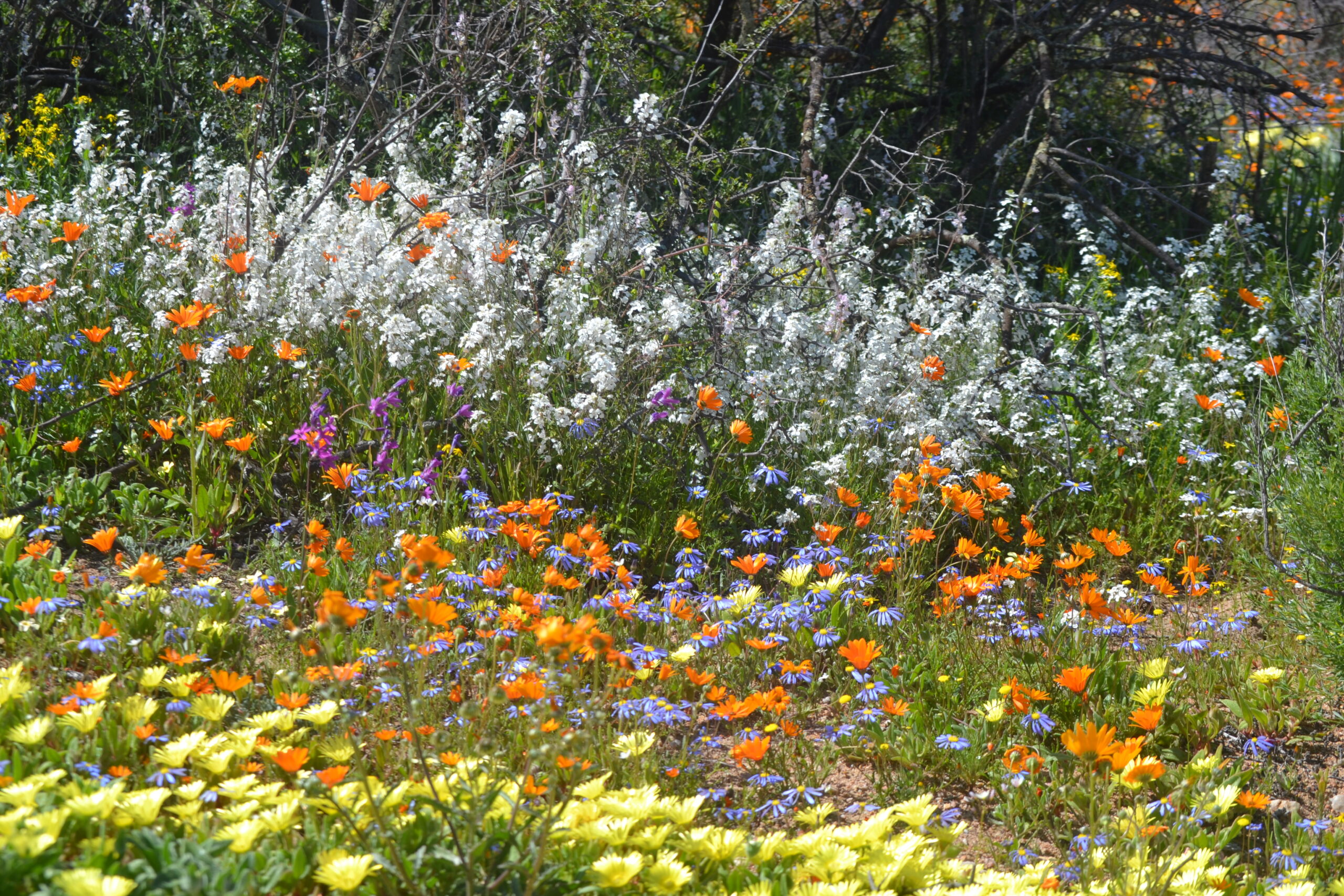
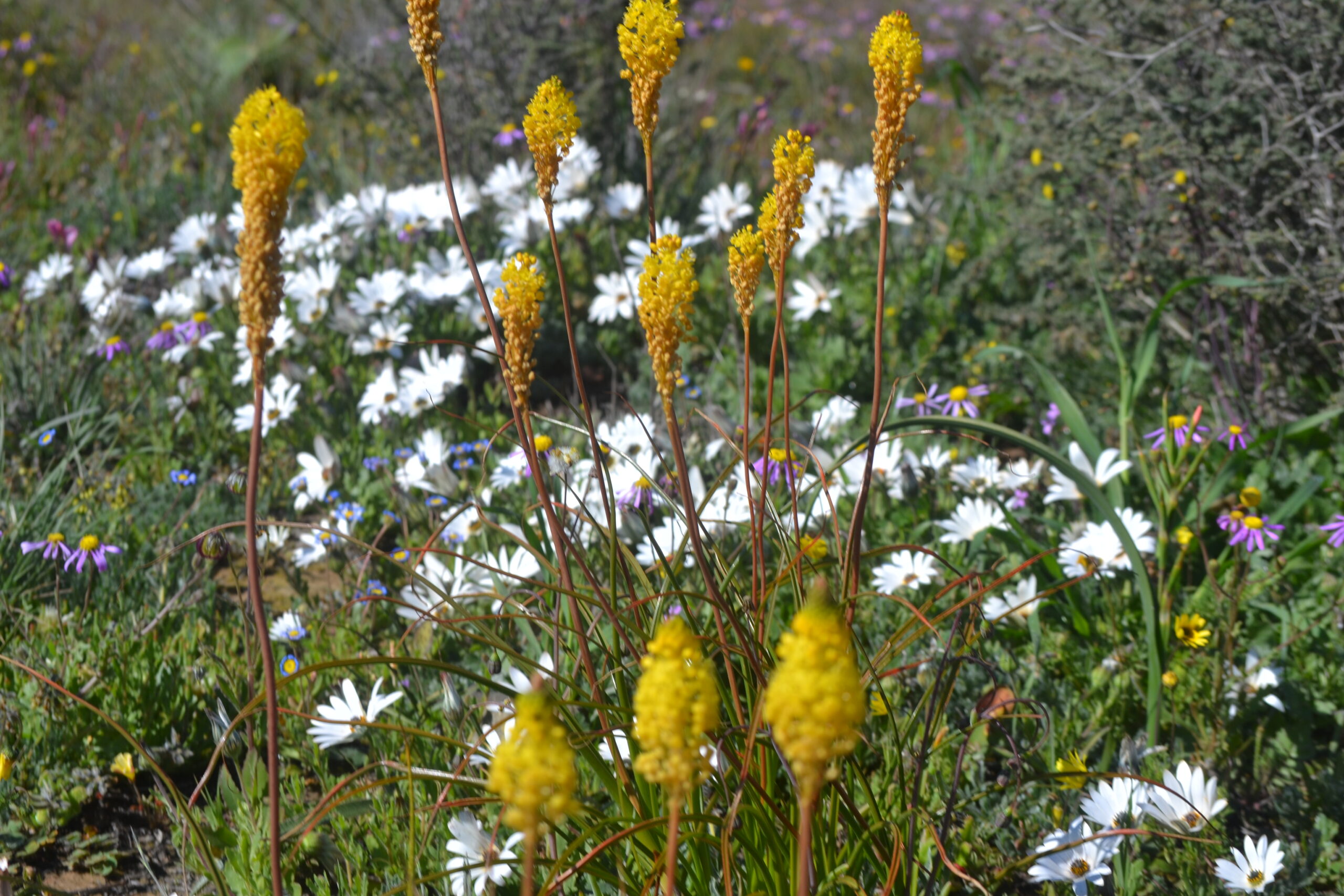
A landscape carpeted in wildflowers, starry skies that stretch as far as the eye can see and a luxury tent with a spectacular view is what awaits us at the luxurious Agama Tented Camp, our home for two nights.
In good seasons the veld around the camp is carpeted with flowers in breathtaking hues.
A recent extension of the Namaqualand National Park, between the Spoeg and Groen rivers, allows us to explore the somewhat flat and undulating landscape along the coastline known as the Sandveld.
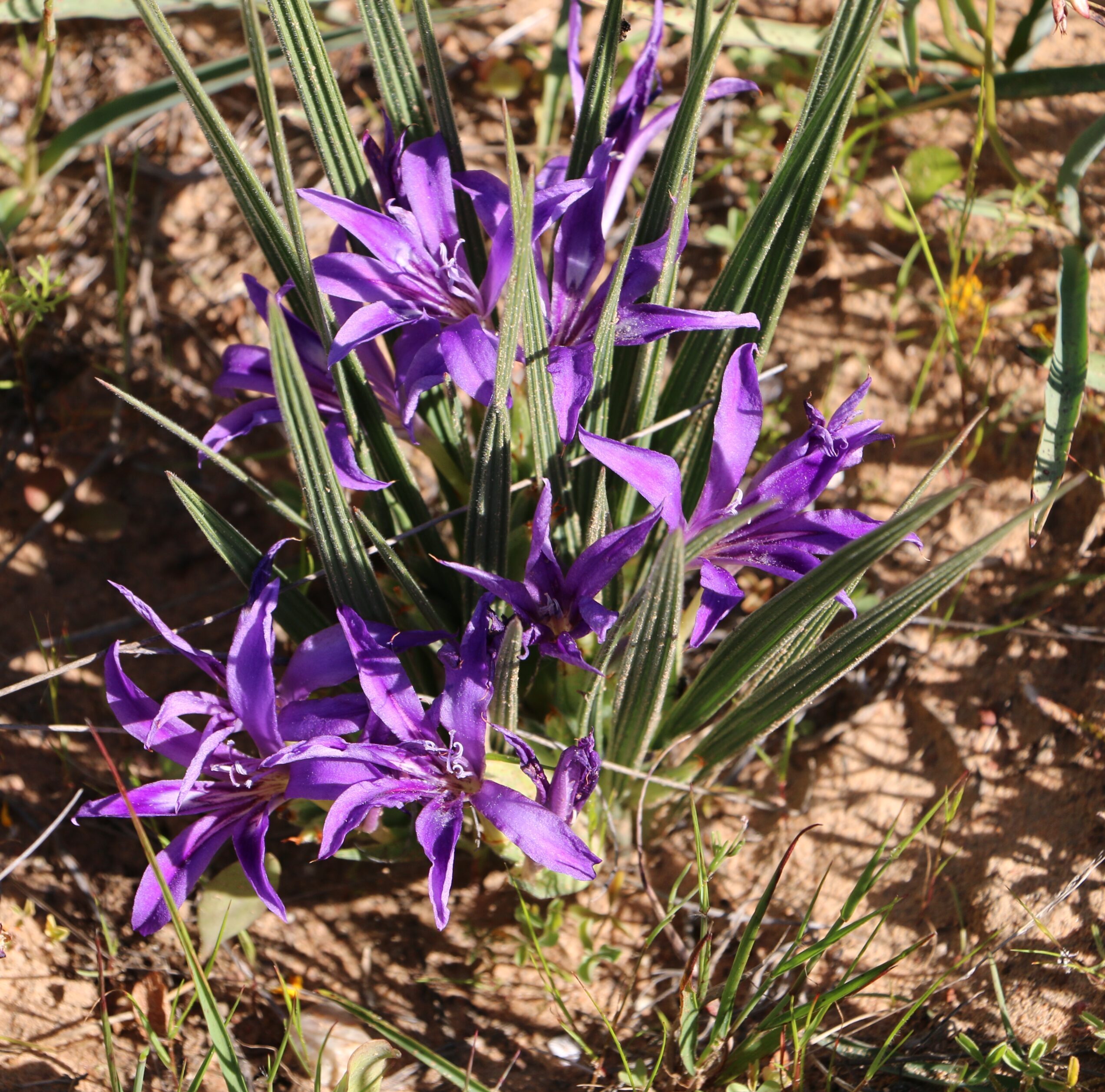
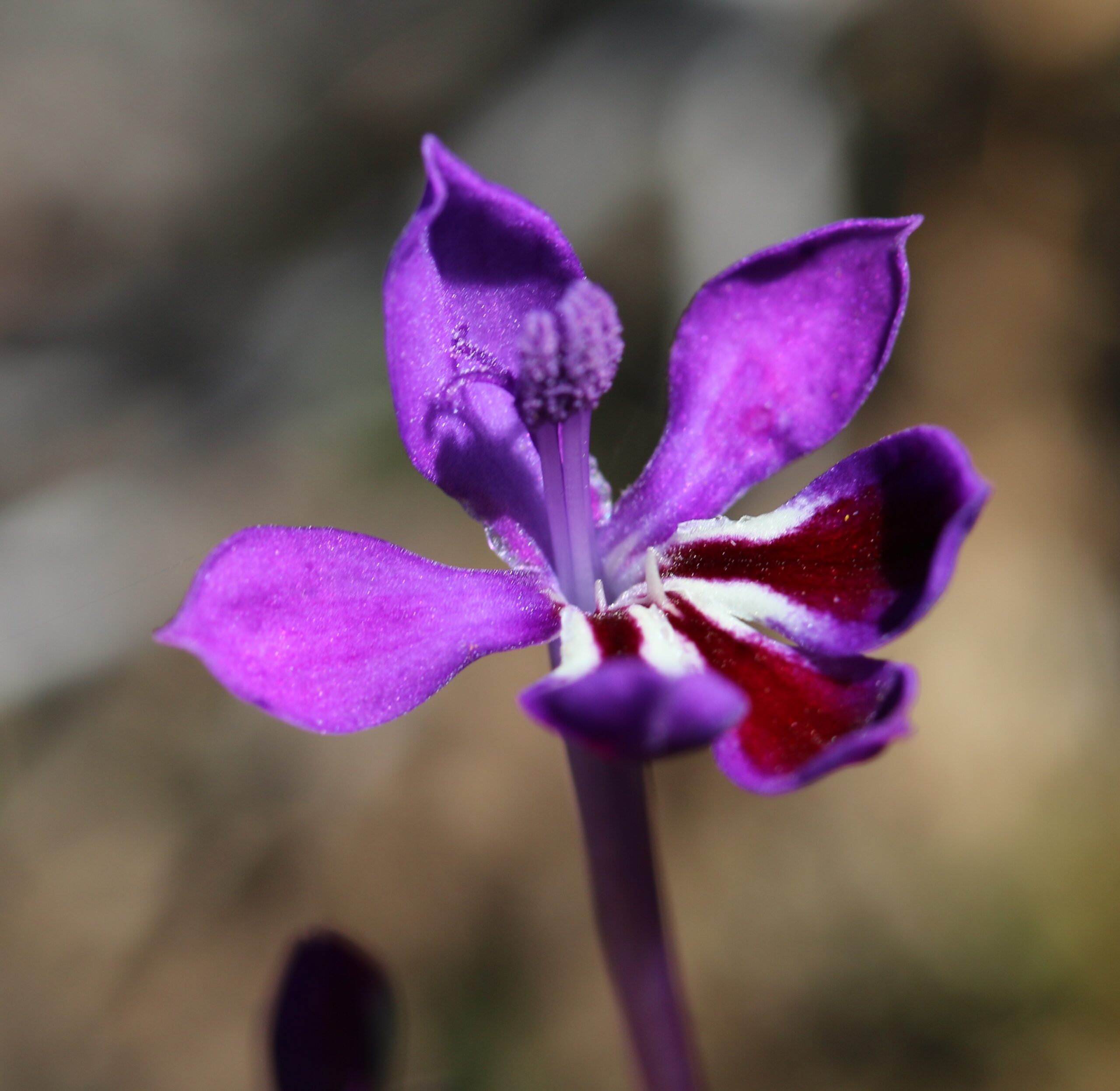
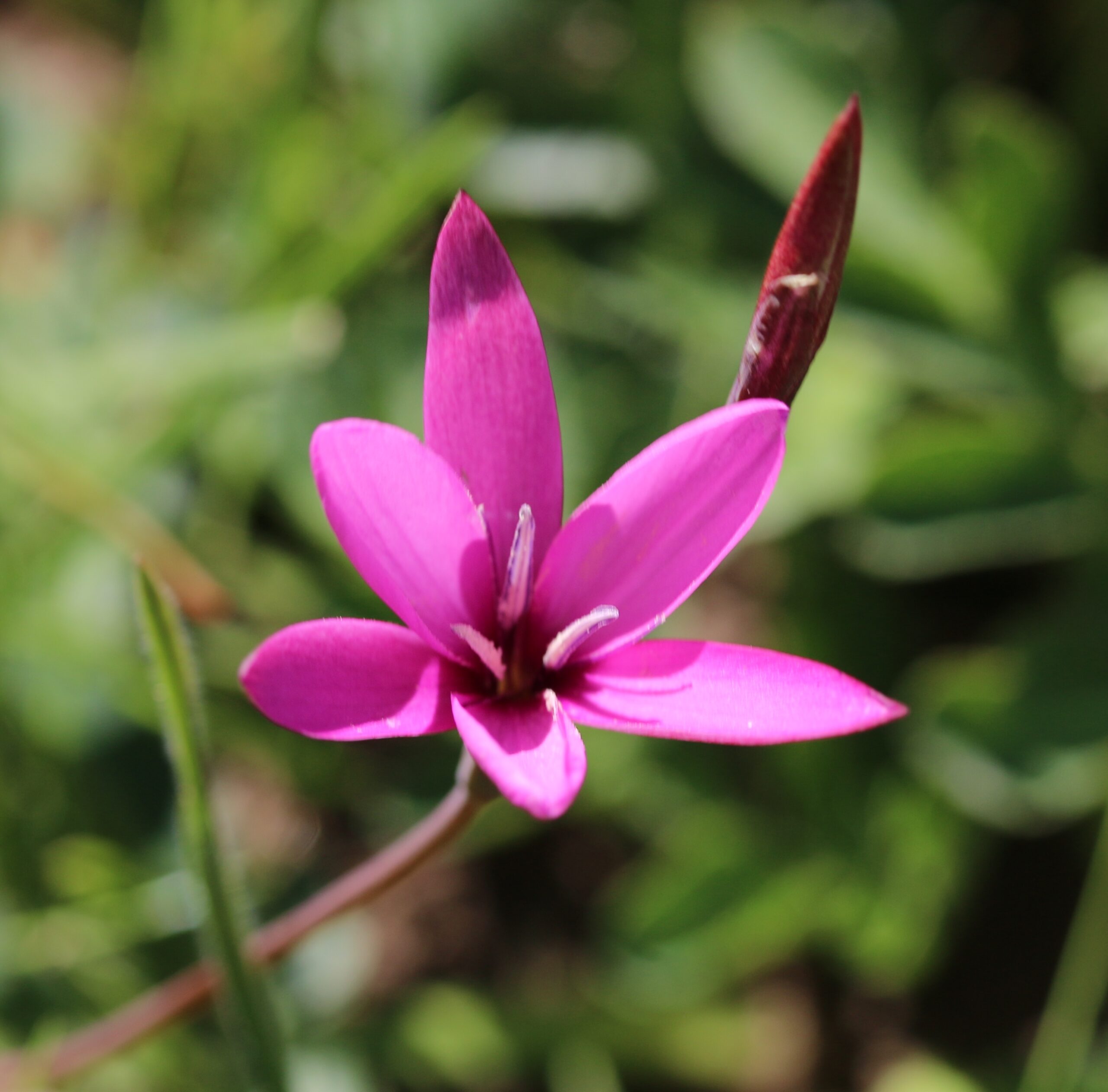
Much of Namaqualand’s coastal plain is covered with deposits of loose, windblown sands which are somewhat alkaline and rich in nutrients. Fringing the dunes is a kind of shrubby vegetation known as Strandveld, which runs into another low shrubland called Duneveld, that is dominated by erect and creeping leaf-and stem succulents as well as annuals. In good years, the Duneveld can present spectacular floral displays. Scattered patches of acidic sands poor in nutrients support stands of different Sand Fynbos vegetation.
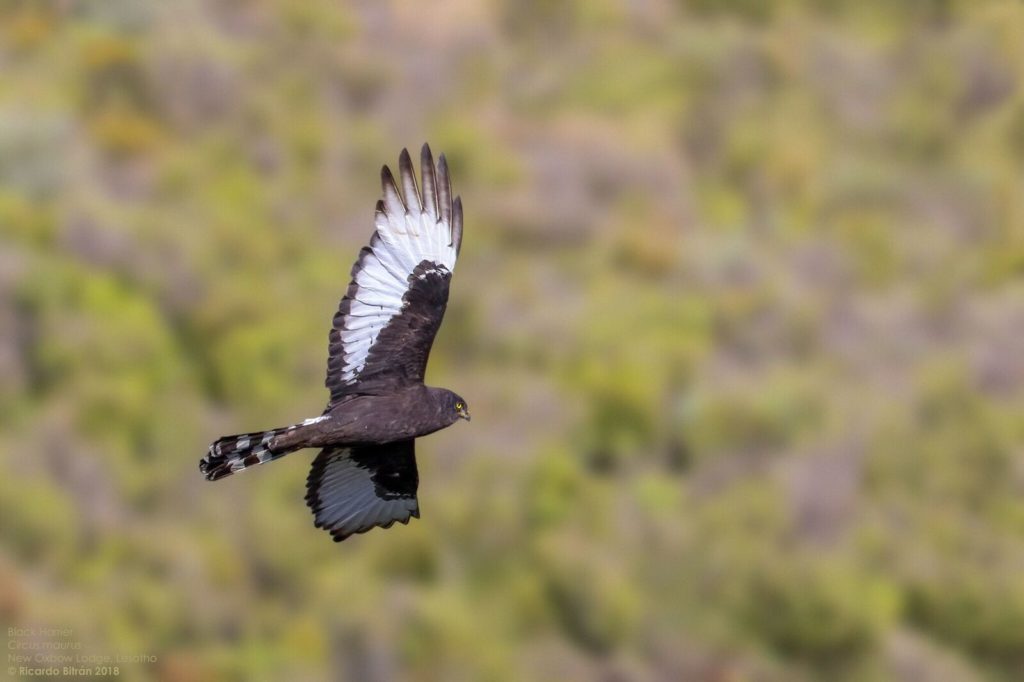
Target birds in the area include Booted Eagle, Black Harrier, Ludwig’s Bustard, Southern Black Korhaan, African Black Oystercatcher, Grey Tit, Bokmakierie, Cape Long-billed and Karoo Larks, Pririt Batis and Cape Penduline-Tit.

After some early morning birding and a tasty breakfast, we proceed to our final overnight stay, a charming guesthouse situated on a working farm near Piekenierskloof, between Citrusdal and Clanwilliam. It offers a tranquil getaway surrounded by orchards, mountain views, and indigenous fynbos.
En route we visit Kransvlei Poort, an accessible and reliable site for Protea Seedeater and Ground Woodpecker.
Unfortunately, all good things must come to an end, and after an exhilarating and soul enriching experience we must head for Cape Town and our return flight to “civilisation”.
This 14-day tour departs from Johannesburg. We travel in an air-conditioned VW Caravelle 4-wheel drive vehicle.
Itineraries
Day 1
Date : August 27, 2026
Johannesburg-Cape Town-Gifberg
Early morning flight from Johannesburg to Cape Town.
Travel northwards via Citrusdal and Clanwilliam to the Gifberg.
Overnight at Maskam Guest Farm.
Overnight at Maskam Guest Farm.
Day 2
Date : August 28, 2026
Gifberg-Port Nolloth
Early morning birding at Maskam.
Depart after breakfast for Port Nolloth.
Travel via Springbok, Spektakel Pass and Kleinsee to Port Nolloth.
Late afternoon birding around Port Nolloth.
Overnight at guesthouse in McDougalls Bay.
Day 3
Date : August 29, 2026
Port Nolloth-Sendelingsdrift, Richtersveld NP
Early morning birding in the dune fields near Port Nolloth
Depart after breakfast for the RIchtersveld, via Alexander Bay.
Visit the Orange River mouth at Alexander Bay, en route to the Park.
Arrive late afternoon and overnight at Sendelingsdrift Rest Camp.
Day 4
Date : August 30, 2026
Sendelindsdrift area
Day spent birding and sightseeing in the Sendelingsdrift area.
Afternoon visit to Potjiespram for birding and sundowners
Overnight at Sendelingsdrift Rest Camp.
Day 5
Date : August 31, 2026
Sendelingsdrift area.
Day spent birding and sightseeing in the Park.
Visit De Hoop and Domerogh Pass.
Overnight at Sendelingsdrift Rest Camp.
Day 6
Date : September 1, 2026
Sendelingsdrift-Gannakouriep
Early morning birding around camp
Depart after breakfast for Gannakouriep.
Arrive early afternoon and overnight at Gannakouriep Wilderness Camp.
Day 7
Date : September 2, 2026
Gannakouriep-Naries
Early morning birding and exploring around camp.
Depart after breakfast for Naries Namakwa Retreat, via Helskloof Pass
and the Richtersveld Conservancy.
Afternoon birding and overnight at Naries Namakwa Retreat.
Day 8
Date : September 3, 2026
Naries-Namaqua NP-Naries
Early morning walk around Naries.
Depart after breakfast for Namaqua National Park near Kamieskroon.
Rest of day spent birding and flower watching in Park.
Late-afternoon return and overnight at Naries Namakwa Retreat.
Day 9
Date : September 4, 2026
Naries area
Early morning walk around Naries.
Visit Goegap Nature Reserve near Springbok for birding and flower watching.
Overnight at Naries Namakwa Retreat.
Day 10
Date : September 5, 2026
Naries-Knersvlakte
Early morning walk around Naries.
Depart after breakfast for Nuwerus via Springbok and Kamieskroon.
Afternoon flower watching and birding in the Knersvlakte.
Overnight at Guest house in Nuwerus.
Day 11
Date : September 6, 2026
Knersvlakte-Garies
Morning birding and flower watching around Nuwerus.
Visit Groenriviermond en route to Garies.
Overnight at Agama Tented Camp.
Day 12
Date : September 7, 2026
Garies area
Day spent flower watching and birding around Garies.
Overnight at Agama Tented Camp.
Day 13
Date : September 8, 2026
Garies-Piekenierskloof area
Early morning birding around Agama Camp.
After breakfast head for Piekenierskloof, via Klawer and Clanwilliam
Visit Kransvlei Poort for afternoon birding.
Overnight at farm guesthouse.
Day 14
Date : September 9, 2026
Piekenierskloof area - Cape Town
Early morning birding around farm.
After breakfast depart for Cape Town International airport for afternoon flight to Johannesburg.
Includes
Ground transport in VW Caravelle 4*4, all meals and accommodation, guiding, conservation fees and entrance fees.
Excludes
Alcoholic beverages, gratuities and items of a personal nature.


